

Expediting means taking any action necessary to ensure that deliveries are made on time and to specification. Expediting is a real-time task, which often demands pro-active responses to situations as they occur. In many cases it’s impossible to be on-site with every supplier around the world, so there is a need for trusted local expeditors with in-depth knowledge of procurement, production and delivery processes. Effective expediting ensures delivery of your product is completed on schedule, saves money by actively working to improve delivery times, and reduces the risks associated with delays in the supply chain.
A process following the issue of a purchase order or contract in which the buying organisation manages the progress of the materials from receipt of order by the supplier, through manufacture or picking, despatch and shipping, and through to delivery. A form of indirect supply chain management, expediting is seen as a failure-related activity, but may be essential when there are multiple intermediaries and multimodal transport involved, such as in international trade.
Why we need Expediting
Business owners know that the expediting of raw materials, parts, systems, and subsystems in inbound logistics is common. But it is a necessary evil for many companies. After all, there are many reasons for expediting, these include missed contracted delivery dates, damage to stock, supplier-related issues, and tight customer requirements.
When you are purchasing these materials, the expediting can be burdensome and stressful. The reality is that many stakeholders that rely on delivery dates are involved in this process, especially when parts are critical. And even though “chasing” suppliers is not a job a buyer is supposed to do, it ends up doing so most of the time.
Expediting is critical in the following areas of Oil and gas industries:
1. Project Expediting
Expediting represents an approach for managing the materials used in a given project. Specifically, it monitors the performance of suppliers and subcontractors so that required products are manufactured to appropriate quality levels, within contractual deadline dates. Therefore, one could postulate that the manner in which the expediting function is executed plays a substantial role in the performance of all types of projects.
2. Supply Chain Expediting
Expediting in regard to the supply chain or procurement is a strategy to ensure that goods and items which are purchased arrive in a timely fashion and meet quality control standards. Sometimes expediting is done by an external ‘expediter’ or it can be done within the procurement department.
As manufacturing and supply chain processes become more complex and competitive, procurement, management and coordination of international projects prove to be increasingly challenging. Our expediting service adds value to your projects through the inspection of manufacturers and assessment of manufacturing production plans and capacity.
The expediting role is simple; goods will be checked as to their progress and opportunity to achieve the programmed delivery date. Typically, the expediter has to ensure that they meet all targets, including quality, safe packaging, arrival times and are exactly to the specification that was agreed between the supplier and the customer. Expediting can be time intensive and this can produce a drain in resources. However, despite this it’s a common process and is symptomatic of various issues within the supply chain.
Objectives & Advantages of Expediting
The importance of expediting is emphasised and techniques are provided to monitor, control and improve supplier on-time delivery. These include methods to apply pressure to suppliers to ensure they fulfil their obligations and how to deal with unacceptable performance
1. Supply Chain Management Expediting Objectives –
- The main objective of supply chain management is to expedite and monitor related production, distribution, and shipment of products and services.
- This can be done by companies with a very good and tight hold over internal inventories, production, distribution, internal productions and sales.
- Avoid Surprises of delays like Shipment delays.
- Material should be received ON TIME at Client end.
- Persuade supplier to do what was agreed
- Solve the problems like ● Supplier Problems (Raw Material, Engineering documentation, Inspection and Testing, Dispatching) ● Build Supplier relationship.
2. Project Expediting Objectives –
- Solves the problem at supplier work.
- Avoid the delays and be aware of suppliers for upcoming delays or challenges.
- Fast tracking of projects.
- Provide document support to the Procurement Department.
- Maintain healthy, open relationships with the Suppliers.
- Comment on supplier performance capabilities and ability to meet quoted delivery requirements with all necessary documentation.
- Monitor / Resolve all Report of Discrepancies (ROD), and Overage, Shortage and Damage (OS & D).
- Communicate with the supplier on the status of delivery.
Advantages /Benefits of Expediting –
- 1. Procured equipment is manufactured and delivered on or ahead of schedule.
- 2. Delays in the supply chain are minimized by effective Expediting.
- 3. Where a delay has occurred, a contingency plan is immediately put in place to minimize its potential impact on the client.
- 4. Timely identification of delays and suggest mitigation plan to achieve delivery targets.
- 5. Expediting helps to save late delivery or inferior quality costs and bridges reputational damage with clients.
- 6. Cost efficiencies are achieved and, where applicable, penalties are avoided as a result of time saved.
- 7. Expediting services are of particular benefit when new suppliers are involved in the supply chain, especially in new regions. In such cases, the client benefits greatly from having a trusted, highly-qualified expeditor with valuable local knowledge tracking order progress and ensuring timely delivery.
- 8. Late delivery or inferior quality will increase expense and could lead to unsatisfied clients, thus the loss of a project or reputational damage. Expediting helps to save these unnecessary costs and reputational damage with clients.
- 9. Effective expediting ensures delivery of your product is completed on schedule, saves money by actively working to improve delivery times, and reduces the risks associated with delays in the supply chain.
Expediting is especially needed in large scale projects, for example, in shipbuilding or when a refinery is being erected, because a delay caused by late delivery or inferior quality will increase expense and could lead to unsatisfied clients, thus the loss of a project or reputational damage. To save these unnecessary costs and minimize potential risks there are some types of expediting is used in industries.
There are basically 2 Types of Expediting:
1. Field Expediting
2. Desk Expediting
Let’s first look at the Field Expediting and its Types.
1. Field Expediting is performed to ensure or evaluate the authenticity of the information from desk expediting. Here the expeditor physically will be visiting the vendor and discuss all issues, status and progress based on the desk expediting and verify/ensure the information provided is correct.
2. Any anomalies observed will be discussed and take recovery plans to overcome the situations.
3. Full time expediting at vendor location will come onto role after analysing the criticality of the project situation, especially to deploy the recovery plans, to keep the project on track or to avoid further delays.
4. It provides a comprehensive review of the exact current status of the order and an educated projection of the future planning and status, to the customer.
5. Furthermore, while being at site, experts for expediting can identify possible problems and bottlenecks that could lead to potential delays.
6. For full time expediting needs, whether for a private order or for a particular project, a dedicated expeditor shall be provided to judge directly with our clients, making certain the foremost direct lines of communication.
7. This ensures that the customer interfaces directly with the appointed expediter and data exchange is as economical as possible.
The Field expediting can perform in two types.
Periodic Expediting and Field Expediting
Let’s look at details of Periodic Expedition
● This kind of service is generally performed at main vendor or sub vendor ‘premises; at specific milestones or according to a frequency established by the customers, or suggested by the field expeditors.
● In Periodic Expediting expeditor will visit weekly or twice in a week at vendor place. And monitor and expedite accordingly.
● The expeditor will submit status reports of project in twice in a week.
● This expediting is mainly use where project manufacturing status and shipment date is as per the given deadline by client.
Second type of Field Expediting is Full time Expediting.
● Full time monitoring / project coverage activities provide clients with continuous in-depth progress information and immediate action by the expediter as soon as problems become apparent.
● A full-time expediting service is normally performed whenever a client requires an expeditor to visit a certain vendor on a full-time basis for a given period of time.
● This ensures that schedules are maintained in line with the specific project needs. For full time expediting needs, whether for an individual order or for a specific project, a dedicated expediter will be provided to liaise directly with the client ensuring the most direct lines of communication.
● This ensures that the client Interfaces directly with the assigned expediter and information exchange is as efficient as possible.
● The full-time expediting services allow our expeditors to monitor all the production processes and ensure that the expected delivery dates are met.
● The necessity of full-time expedition will be in-agreement with client based on the results from Desk & Periodic Expedition reports.
Second Type of Expediting is a Desk or Telephone Expediting -
1. Desk / telephone expediting provides a valuable tool for monitoring the progress of orders with a manufacturer. Contact is established at specific milestones in the order and a brief summary of the current status obtained during the ensuing conversation.
2. An experienced expediter can very quickly assess whether the order is progressing according to plan or whether other measures are required to verify and possibly improve the order progress.
3. Desk / telephone expediting is best used as a tool to supplement field expediting.
4. It is also a useful way of making the vendor aware that delays on the order will not be accepted by their client.
5. Desk expediting is the most common and cheapest expediting approach that companies are using to screen their order progress from each supplier.
6. It is effective as long as the supplier is cooperative and provides a high level of communication and accuracy in data but if it doesn’t then another approach must be executed such as Field Expediting.
7. It provides continuous comprehensive progress data and immediate action by the expeditor as soon as issues become apparent.
Reasons why expediting is required.
- Expediting is especially needed in large scale projects such as Power Plants, Refineries, Shipbuilding, Factory Buildings or Important and Prestigious Projects, because a delay caused by late delivery or inferior quality will increase expense and could lead to unsatisfied clients, thus the loss of a project or reputational damage. Expediting is very important to save these unnecessary costs and minimize potential risks.
- The requirement of on-time delivery each and every time is critical to businesses. Late deliveries will have considerable impact on the buying company’s performance.
- To save these unnecessary costs and minimize potential risks, the supplier and customer may agree on the use of a third-party expeditor.
- These are experts from companies specializing in this field who keep track of the deadlines, supervise progress on site and check whether the components are properly packed.
- Expediting services are of particular benefit when new suppliers are involved in the supply chain, especially in new regions. In such cases, the client benefits greatly from having a trusted, highly-qualified expeditor with valuable local knowledge tracking order progress and ensuring timely delivery.
Related Blog
EXPEDITING MANGEMENT
Expediting Excellence: Optimizing Workflow for Maximum Efficiency
Expediting means taking any action necessary to ensure that deliveries are made on time and to specification.
Learn more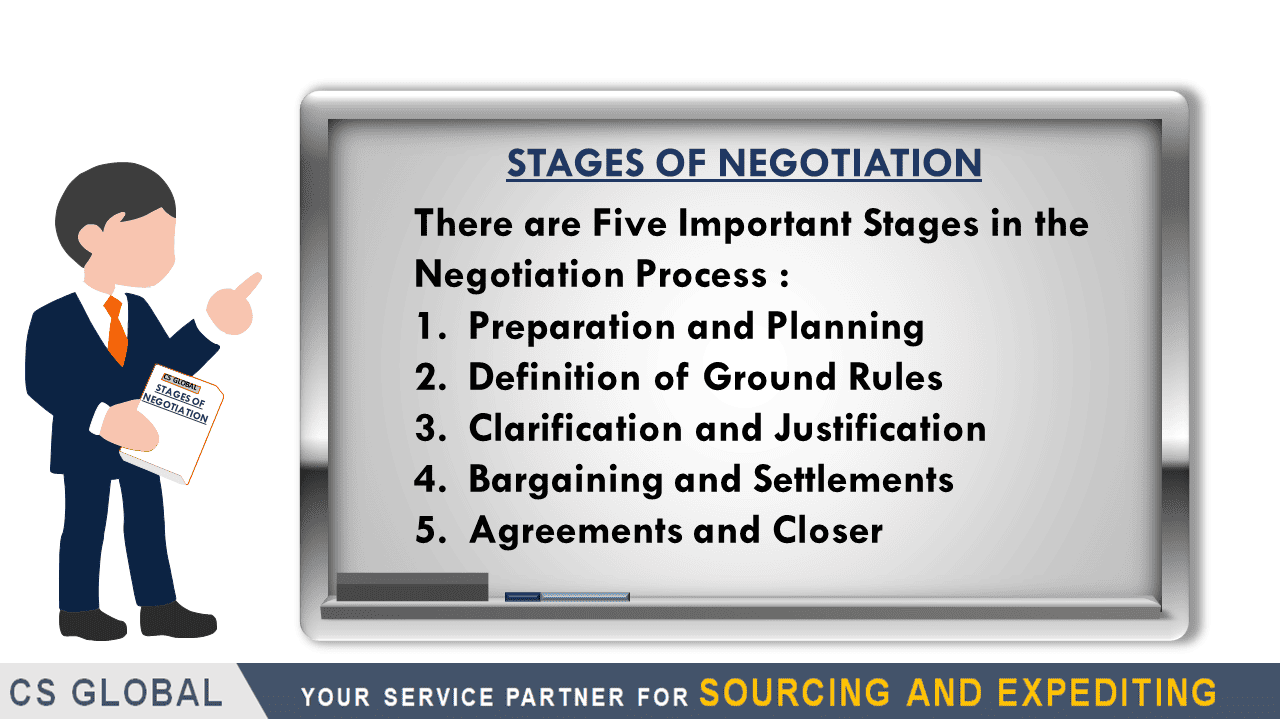
ISOURCE INDIA BLOG
Stages of Negotiation: Key Steps for Effective Agreements
Negotiation is a vital skill in business, ensuring that both parties reach mutually beneficial agreements. Below are the *five important stages* of the negotiation process
Learn more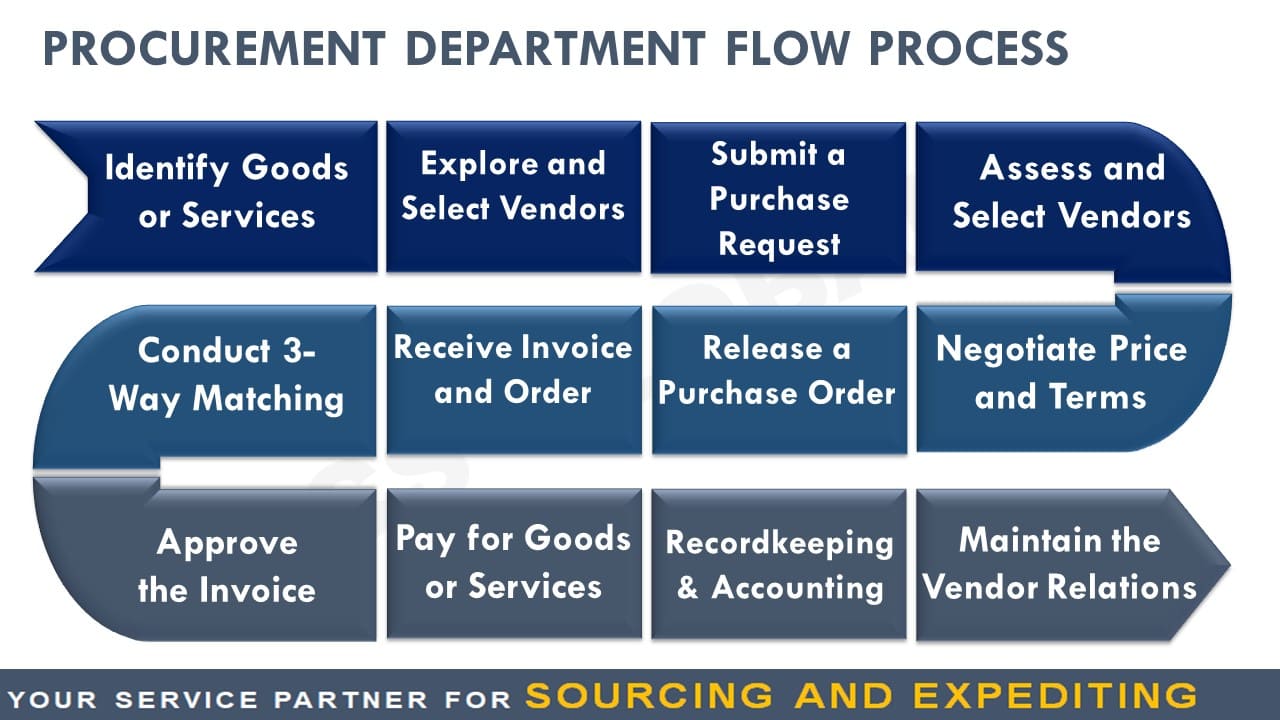
PROCUREMENT MANAGEMENT
Procurement Department Process Flow: Ensuring Efficiency in Sourcing
The procurement department is the backbone of any organization's supply chain management, ensuring goods and services are sourced efficiently and cost-effectively. Here’s an overview of the key steps involved in the procurement process flow
Learn more